👉 Let’s stay connected on social media!
Hearty Lobster Chowder Recipe for Cozy, Flavorful Weeknight Dinners
QUICK REMINDER:
There’s a “jump to recipe” button for convenience, but if you head straight to the recipe card, you might miss useful ingredient notes, step-by-step tips, FAQs, and other helpful details that can make your dish turn out even better.
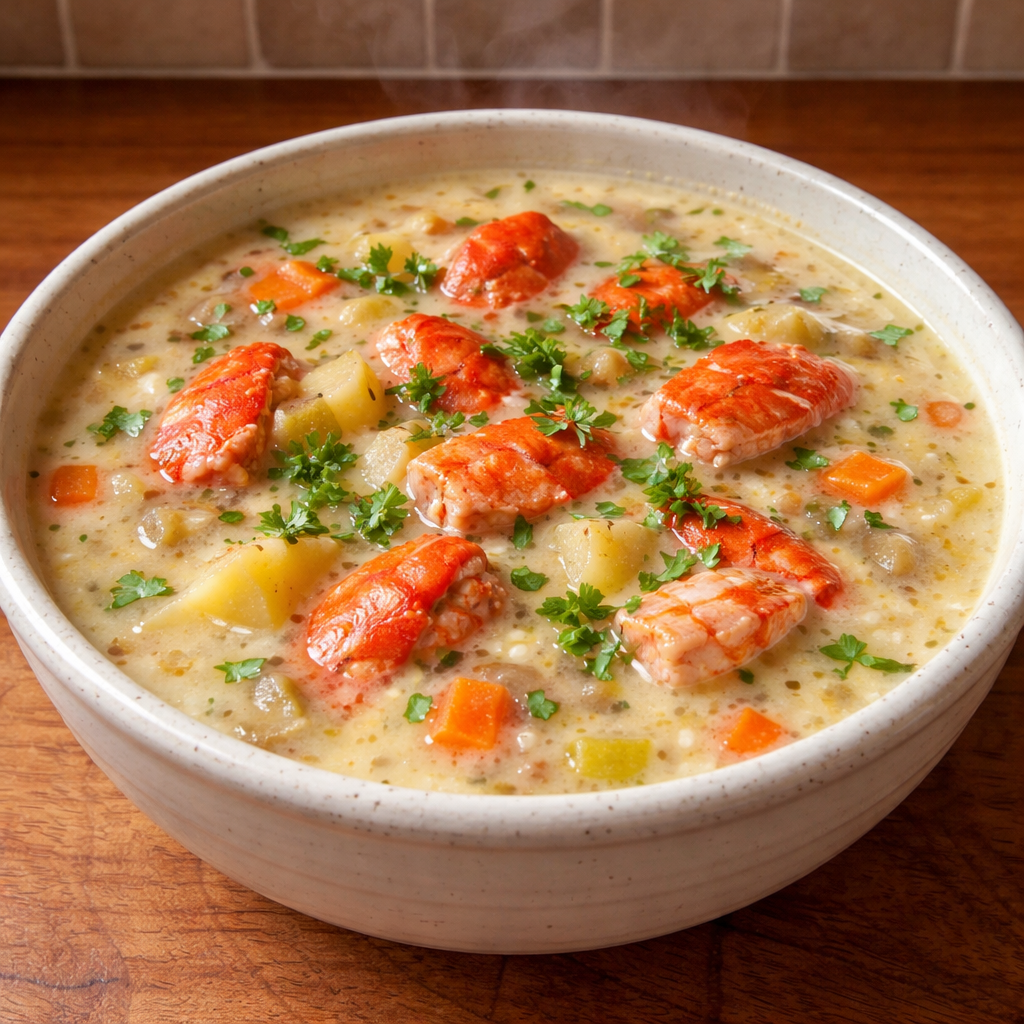
There is a particular kind of cold that settles in your shoulders. It shows up on those short, gray days when dinner sneaks up on you and everyone is a little quieter than usual. That is the kind of night this lobster chowder is for. Not a showpiece for a holiday table, just a deep, steadying bowl that feels like a kind word you can eat with a spoon.
Lobster sounds fancy, and maybe a little risky if you have ever overcooked seafood and watched it go rubbery in seconds. This version is kinder than that. Most of the work happens in the broth and vegetables, and the lobster slips in at the end, almost like a guest arriving just in time for the good part of the conversation. The goal is not restaurant polish, it is warmth and reliability.
Cooking lobster chowder with a bit of breathing room
There is something grounding about starting with a big pot on the stove and a cutting board that is a little too full. Onion, celery, carrots, potatoes. The quiet work of chopping has a way of nudging the day aside. You move from “What a mess this week is” to “Look at that, everything is diced and ready” without really noticing when it happened.
If you are using cooked lobster meat you picked up from the store, you are already halfway there. That is the beauty of this chowder. The time goes into building flavor in the base so the lobster only needs a few calm minutes in the hot cream to turn the whole thing special.
I like to think of this as a soup that minds its own business. Once the vegetables are in and the broth is doing its gentle, steady simmer, you get a little window to clear the counter, set out the bowls, or just lean your hip against the dishwasher and breathe for a minute. It is dinner, but it is also a small pause.
What You Need in the Kitchen Tonight
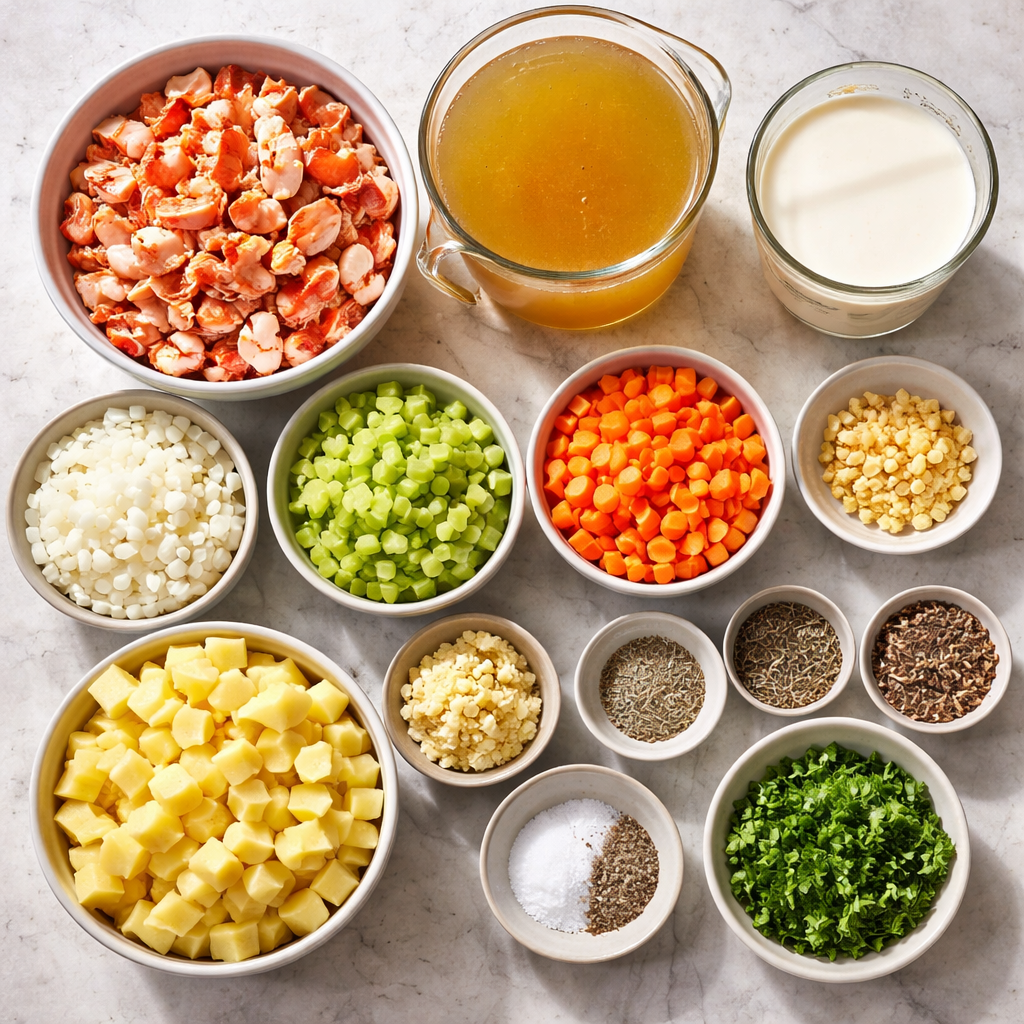
Here is the part where everything gets a bit more concrete. The pieces of the puzzle laid out on the counter, waiting to be turned into something steaming and rich.
- 1 pound lobster meat, cooked and chopped
- 4 cups seafood or chicken broth
- 2 cups heavy cream
- 1 onion, diced
- 2 stalks celery, diced
- 2 carrots, diced
- 3 cloves garlic, minced
- 2 potatoes, diced
- 1 teaspoon thyme
- Salt and pepper to taste
- Fresh parsley for garnish
The Calm, Straightforward Directions
Once everything is within reach, the cooking itself is pleasantly linear. No multitasking acrobatics, no three pans competing for your attention. You are mostly staying with one pot and watching it gradually turn into something you will want seconds of.
- In a large pot, sauté onion, celery, and carrots until softened.
- Add garlic and cook for another minute.
- Pour in the broth and bring to a boil.
- Add diced potatoes and cook until tender.
- Stir in the heavy cream and bring to a gentle simmer.
- Add the chopped lobster meat and thyme, and heat through.
- Season with salt and pepper to taste.
- Serve hot, garnished with fresh parsley.
How to Know You Are On Track
Cooking is easier when you know what you are looking for, not just what the clock says. With this chowder, the pot will tell you a lot if you pay mild attention.
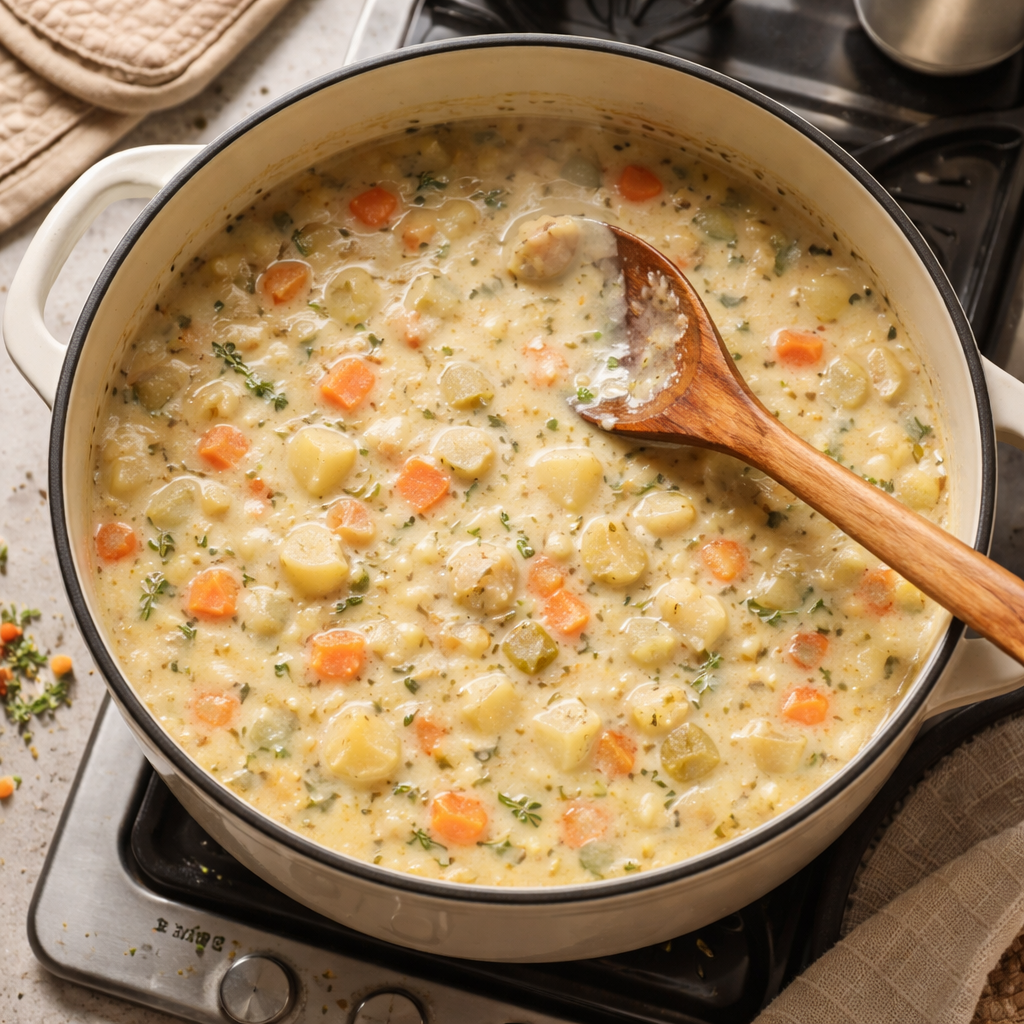
When the onion, celery, and carrots are ready, they will look a little glossy and smell sweet instead of sharp. If you hear a harsh sizzling, turn the heat down and give them a stir so they soften instead of brown. A faint golden edge is fine, deep browning is not the goal here, you want gentle flavor.
After you pour in the broth and it reaches a boil, the potatoes go in. This is a good time to poke one every now and then with a knife tip. They should go from firm and starchy to tender with just the slightest resistance. If they start breaking apart when you stir, you have gone a bit far, but do not worry, it will just make the chowder a bit thicker.
The cream phase is where people get nervous. Keep the heat on medium low so it slides into a quiet simmer, not a rolling boil. You should see lazy little bubbles around the edges, almost like the pot is sighing. That is where the texture stays silky rather than splitting or turning grainy.
The lobster only needs to be heated through, not cooked again. Once it is in, give it just a few minutes, stirring gently. When you see steam rising steadily and everything looks cozy and unified, you are done. Taste, salt, taste again. If it tastes flat, it is usually a pinch more salt or a few extra twists of pepper you are missing, not some mysterious chef trick.
Little Choices That Make It Yours
Once you have the base recipe down, you can start nudging it toward your own idea of comfort.
If you like a thicker chowder, you have options that do not require precision. You can let the potatoes cook until some of them start to break down, then take a ladleful or two of the soup, blitz it with an immersion blender, and pour it back in. Or, if gadgets are not your style, just use the back of a spoon to mash a few potato cubes against the side of the pot.
Maybe someone at your table swears they do not like celery. Leave it out and add an extra carrot or two, the chowder will lean a little sweeter but still taste deeply savory. If you want more vegetables in there, corn kernels slip in easily, especially if you stir them in with the lobster.
Fresh thyme is lovely, but if all you have is dried, that is perfectly fine. Rub it between your fingers as you add it so it wakes up a bit. And if you are cooking for people who love a bit of brightness, set lemon wedges on the table and let them squeeze their own at the very end. A little acidity can lift the richness in a way that makes the second spoonful taste as inviting as the first.
When Life Is Busy, But You Still Want Lobster
There are days when even the thought of simmering a pot for half an hour feels like a stretch. The nice thing about this chowder is that most of the pieces can be nudged ahead of time.
If you are someone who does a bit of weekend prep, you can dice the onion, celery, carrots, and potatoes and stash them in the fridge. The night you want chowder, you are basically just sautéing, simmering, and stirring cream.
Leftover lobster from a special meal is welcome here too. That slightly indulgent container in the fridge that you do not quite know what to do with? This is its second act. Even a mix of claw and knuckle meat, or smaller pieces, will feel lavish tucked into a creamy, well seasoned base.
And if you only have a little lobster, not the full pound, you can still make this work. Make the soup exactly the same, then swirl in the lobster at the end and treat it almost as a garnish. Smaller amounts taste more important when every bite of meat is surrounded by good broth, tender vegetables, and cream.
Questions That Tend To Come Up
Yes. Thaw it completely in the fridge, then gently pat it dry before adding it to the chowder. Frozen lobster is already a bit more delicate, so add it right at the end and warm it through slowly so it stays tender instead of going tough.
Half and half will work in a pinch, the chowder will just be slightly lighter and a bit less velvety. To avoid curdling, keep the heat low once it is in the pot.
You can make the base ahead, right up through simmering the broth, vegetables, and cream. Cool it, refrigerate, and reheat gently the next day. Add the lobster only when the chowder is hot and ready to serve, so the meat does not overcook with repeated heating.
Cut them into even pieces, about small dice, and check them early. As soon as a knife slides in with just a little resistance, you are ready to move on. Stir a bit more gently once they are tender.
Something simple: warm crusty bread, a green salad, maybe a few crackers. The chowder is rich, so it likes plain, unfussy company.
The Last Quiet Spoonful
The funny thing about a pot of chowder is how it alters the evening without making a big announcement. People linger a bit longer, scrape the bottom of their bowls, and somehow the day feels softer around the edges.
If you have leftovers, they make an easy lunch, just reheat very gently until warm. You might find the chowder even a touch better the next day, the flavors more settled, the way conversations sometimes make more sense after a night’s sleep.
You do not have to get every detail perfect for this to be good. If the potatoes are a little softer than planned or the cream simmered a tiny bit harder than you meant, it will still taste like comfort. In the end, it is just a pot of warm, steady soup with small pieces of lobster tucked inside, waiting to remind you that dinner can be both simple and special, all in the same bowl.
Print
Lobster Chowder
- Total Time: 45 minutes
- Yield: 4 servings 1x
- Diet: Pescatarian
Description
A comforting lobster chowder that’s rich and creamy, perfect for cozy dinner nights.
Ingredients
Scale
- 1 pound lobster meat, cooked and chopped
- 4 cups seafood or chicken broth
- 2 cups heavy cream
- 1 onion, diced
- 2 stalks celery, diced
- 2 carrots, diced
- 3 cloves garlic, minced
- 2 potatoes, diced
- 1 teaspoon thyme
- Salt and pepper to taste
- Fresh parsley for garnish
Instructions
- Sauté onion, celery, and carrots until softened.
- Add garlic and cook for another minute.
- Pour in the broth and bring to a boil.
- Add diced potatoes and cook until tender.
- Stir in the heavy cream and bring to a gentle simmer.
- Add the chopped lobster meat and thyme, and heat through.
- Season with salt and pepper to taste.
- Serve hot, garnished with fresh parsley.
Notes
For a thicker chowder, blend a portion of the soup and stir it back in. You can also customize by adjusting vegetables per your taste.
- Prep Time: 15 minutes
- Cook Time: 30 minutes
- Category: Soup
- Method: Stovetop
- Cuisine: American
Nutrition
- Serving Size: 1 serving
- Calories: 450
- Sugar: 3g
- Sodium: 900mg
- Fat: 25g
- Saturated Fat: 15g
- Unsaturated Fat: 5g
- Trans Fat: 0g
- Carbohydrates: 30g
- Fiber: 4g
- Protein: 20g
- Cholesterol: 80mg