👉 Let’s stay connected on social media!
How to Make Delicious Potato Pasties with Cheese and Onion
QUICK REMINDER:
There’s a “jump to recipe” button for convenience, but if you head straight to the recipe card, you might miss useful ingredient notes, step-by-step tips, FAQs, and other helpful details that can make your dish turn out even better.
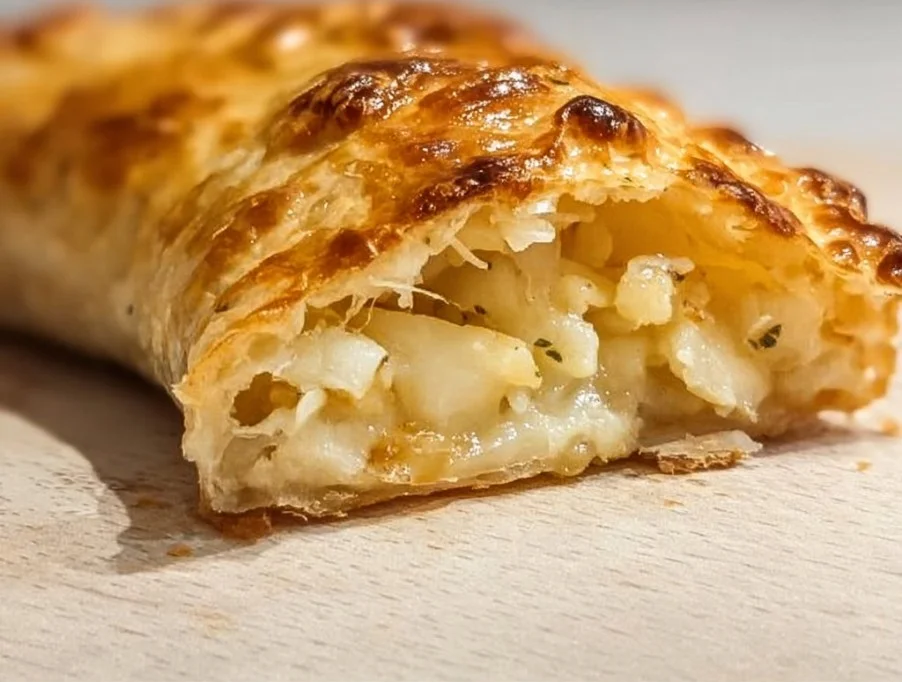
There are days when dinner feels like one more decision you do not have the brain space to make. You open the fridge, see a bag of potatoes, half an onion, a block of cheese, a box of pastry from the freezer, and think, Is that anything? It is. It is absolutely something. It is potato, cheese, and onion pasties, and it is the kind of supper that makes the house smell like someone had a plan all along.
These are the sort of hand pies that sit in that gentle place between snack and meal. You can wrap one in a napkin and eat it over the sink, or put them on a plate with some greens and call it dinner. They are in the same family of quiet, reliable food as a simple casserole or a warm breakfast sandwich, the kind you might find next to a pan of bubbling, no-fuss comfort food at a church potluck table.
You do a little chopping, a little stirring, then let the oven do the rest while you clear the counter or help with homework. Nothing fussy, nothing delicate, just ingredients that like each other and know how to behave together.
Why These Potato Pasties Belong in Your Regular Rotation
A lot of people have been burned by pastry, figuratively and literally. Maybe the last time you tried something in a crust, the filling leaked, or the bottoms were soggy, or the dough tore and you felt that flare of frustration that is out of proportion to what is actually happening with the flour and butter in front of you.
These pasties are how you work your way back to trusting pastry again.
The filling is simple, which removes half the stress. Potatoes for comfort and body, onions for sweetness and a little bite, cheese for richness and glue. Frozen puff or shortcrust pastry means you do not have to manage dough from scratch on a Tuesday night, and that is not cheating, that is just smart delegation.
Another quiet advantage, these pasties are perfectly happy on their own. No last-minute sauce, no side that only you remembered to plan. A bit of salad if you have one, maybe some pickles, maybe nothing at all. The kind of meal that forgives you for being tired.
If you like the sort of handheld comforts you can also eat for breakfast, the feeling is similar to biting into a flaky Mediterranean-style breakfast sandwich, just with potatoes in the lead role.
What You’ll Need, Plain and Simple
Here is everything that goes into these pasties, without any surprise extras hiding at the bottom:
- 2 cups potatoes, peeled and diced
- 1 cup cheese (such as cheddar), grated
- 1 onion, chopped
- 1 tablespoon butter
- Salt and pepper to taste
- 1 package of puff pastry or shortcrust pastry
- 1 egg (for egg wash), beaten
{ingredients_image}
Use whatever potatoes you have, really. Waxy ones hold their shape a bit more, floury ones go softer and a little mash-y inside the pastry. Both ways are good, just different personalities of the same dish. As for cheese, anything that melts nicely and tastes like something will work.
From Chopped to Comforting: Step-by-Step Directions
This is the part where you turn a few odds and ends into something people will ask for again.
- Preheat the oven to 400°F (200°C).
- In a pan, melt the butter over medium heat and sauté the onions until translucent.
- Add the diced potatoes, season with salt and pepper, and cook until tender.
- Remove from heat and stir in grated cheese until melted and combined.
- Roll out the pastry on a floured surface and cut into circles.
- Place a spoonful of the potato mixture in the center of each circle.
- Fold the pastry over and seal the edges, crimping with a fork.
- Brush the tops with beaten egg for a golden finish.
- Bake in the preheated oven for 20-25 minutes or until golden brown.
- Serve warm or at room temperature.
{preparation_image}
You will know the filling is ready when the potatoes are soft enough to squish with the back of a spoon but not falling apart completely. The cheese should disappear into the heat and pull everything together in a cohesive, scoopable mixture.
A Few Calm, Useful Tips While You Cook
The trick with something this simple is paying attention to the small details that quietly make all the difference.
When you sauté the onions, let them go just past “sweated” into gently golden at the edges. That is where their sweetness starts to show up. If they are still sharp-smelling, give them another couple of minutes, stirring now and then so they do not catch.
Keep the potato dice on the small side, roughly pea to chickpea size. Too big and they poke through the pastry or stay a bit firm in the middle. Too tiny and you edge closer to mashed potato, which is not wrong, just a different vibe.
On the pastry, try to work while it is still cool but not brittle. If it feels sticky and soft under your fingers, slide the cut circles back into the fridge for 5 to 10 minutes before filling them, that pause can prevent tearing and help them puff better in the oven. On the other side, if they crack when you fold them, they are a bit too cold, just let them sit on the counter for a few minutes.
Do not overfill, even though it is tempting. A modest spoonful of the potato mixture is enough. You want the pastry to close comfortably around the filling, not fight you.
And if a little cheese leaks out while baking, that happens in the most experienced kitchens too. Think of it as a crispy bonus, not a failure.
If You Want to Play With the Filling
Once you have made these once the basic version will settle into your hands, and you may find yourself wanting to tweak them to suit what is in your fridge or what kind of comfort everyone is craving.
You can stir in a handful of finely chopped green onions or chives with the cheese, for a little fresh onion brightness against the creamy potato. A pinch of dried thyme or smoked paprika folded into the potatoes in the pan nudges the flavor in a deeper, cozier direction without turning this into a project.
For more vegetables, finely diced carrot or frozen peas can join the onions and potatoes in the pan. The important thing is to keep pieces small, and to make sure everything is tender before it ever touches the pastry. The oven is mainly the place for crisping and browning here, not finishing hard vegetables.
If you like playing around with flavors tucked into pastry, this same curiosity is what makes recipes like my goat cheese and apple croissant sandwich feel special with hardly any extra work. The rule is the same, keep the fillings balanced, not too wet, and kind to the pastry that has to hold them.
What to Serve Alongside (Or How to Stretch This Into a Meal)
On a busy night, two warm pasties on a plate are a perfectly reasonable dinner, especially if you have been grazing while you cook. But a couple of small additions can make things feel more rounded without much more effort.
A quick salad of whatever leafy greens you have, tossed with lemon juice, a pinch of salt, and a drizzle of oil, cuts through the richness and brings something fresh and bright to the plate. If there is no lettuce in the house, sliced tomatoes with salt, pepper, and a trickle of oil do the same job.
These also sit nicely next to a simple pot of soup, especially something brothy and light. You do not want another heavy, starchy bowl competing with the potatoes. Think of the pasties as the solid part of the meal and let everything else around them be about acidity and crunch.
If you are feeding people at different times, they reheat gently in a low oven, around 300°F (150°C), for 10 to 15 minutes. They do not bounce back quite as flaky as when first baked, but they are still deeply satisfying and far better than anything straight from the microwave.
Little Troubleshooting Corner
Most of the snags people hit with this recipe come down to moisture and sealing.
If the bottoms are soggy, next time let the filling cool a bit longer before spooning it onto the pastry. Hot filling steams the dough from the inside. You can also move the baking sheet closer to the lower third of the oven so the heat hits the base more directly.
If the edges refuse to stay sealed, try brushing a thin line of water or beaten egg around the rim of the pastry circle before folding. Press firmly, then crimp with a fork to really lock the two layers together. A little patience at this stage saves you cleaning cheese off the baking tray later.
If the tops brown too quickly, tent the tray loosely with foil for the rest of the baking time so the centers finish cooking without the pastry getting too dark. Trust your eyes more than the clock, every oven runs a little differently.
And remember, even the slightly misshapen ones taste good. The goal here is a cozy, filling supper, not something that looks like it came from a pastry case.
Questions Home Cooks Actually Ask
Yes, you can. Cook the potato and onion mixture, stir in the cheese, then let it cool completely before storing it in the fridge in a covered container for up to 2 days. When you are ready to assemble, bring it closer to room temperature so it is easier to spoon and does not chill the pastry too much.
Shortcrust absolutely works. The texture is a little more sturdy and less flaky, but it holds the filling beautifully and is sometimes easier to handle if you are nervous about pastry. Use whichever you feel more relaxed working with.
Do not overfill, that is the big one. Then make sure the edges of the pastry are clean (no stray bits of filling), press them together firmly, and crimp with a fork. A small slit in the top with a knife can also give steam a way out so it does not force the seams open.
Yes. The best way is to assemble the pasties, lay them on a tray, and freeze until solid. Then transfer them to a bag or container. Bake from frozen, adding a few extra minutes, until hot through and golden.
Any well-melting cheese with good flavor, like Gouda, Colby, or a mild provolone, will do just fine.

Potato, Cheese, and Onion Pasties
- Total Time: 40 minutes
- Yield: 4 servings 1x
- Diet: Vegetarian
Description
Delicious hand pies filled with a comforting mixture of potatoes, cheese, and onions, perfect for an effortless dinner or snack.
Ingredients
Scale
- 2 cups potatoes, peeled and diced
- 1 cup cheese (such as cheddar), grated
- 1 onion, chopped
- 1 tablespoon butter
- Salt and pepper to taste
- 1 package of puff pastry or shortcrust pastry
- 1 egg (for egg wash), beaten
Instructions
- Preheat the oven to 400°F (200°C).
- In a pan, melt the butter over medium heat and sauté the onions until translucent.
- Add the diced potatoes, season with salt and pepper, and cook until tender.
- Remove from heat and stir in grated cheese until melted and combined.
- Roll out the pastry on a floured surface and cut into circles.
- Place a spoonful of the potato mixture in the center of each circle.
- Fold the pastry over and seal the edges, crimping with a fork.
- Brush the tops with beaten egg for a golden finish.
- Bake in the preheated oven for 20-25 minutes or until golden brown.
- Serve warm or at room temperature.
Notes
Allow the filling to cool before adding to the pastry to prevent sogginess. Feel free to experiment with different fillings and cheeses.
- Prep Time: 15 minutes
- Cook Time: 25 minutes
- Category: Main Course
- Method: Baking
- Cuisine: British
Nutrition
- Serving Size: 1 pasty
- Calories: 350
- Sugar: 2g
- Sodium: 400mg
- Fat: 12g
- Saturated Fat: 4g
- Unsaturated Fat: 6g
- Trans Fat: 0g
- Carbohydrates: 45g
- Fiber: 3g
- Protein: 15g
- Cholesterol: 30mg